




The Real Cost of Free VPNs: What You Actually Pay

A free VPN doesn't cost money, but it's rarely free of cost altogether. What gets traded away is usually data, a speed limit, or how stable the connection stays. Here are the four costs that show up most often.



A free VPN doesn't charge money, but that's rarely the same as being free of cost. The cost just isn't paid in cash — it usually shows up as unclear data practices, capped speed or data, more ads than expected, or a service that can shut down without warning. This piece breaks those costs apart, then covers the situations where free is genuinely fine.
Running a service that connects overseas costs real money in servers and bandwidth, every minute, with no pause. A product that charges nothing and never explains how it's funded either makes that money back some other way, or simply won't stay running for long. That's not a reason to write off every free product — legitimate companies use free trials to attract users too. The difference is whether the revenue path is actually clear.
This isn't "free equals dangerous, paid equals safe." It's meant to take the word "cost" apart so you know exactly where to look and can judge for yourself whether it's worth it — instead of downloading the first thing labeled "free."
Free is never actually free
A free product usually survives one of three ways: ad revenue, using data for some other business purpose, or treating the free tier as a funnel toward a smaller group of paying users. None of the three is inherently wrong — plenty of internet services run this way — the question is whether users actually know which model they're in.
The check isn't complicated: look up the company behind it, and see whether you can find who operates it, how to contact them, and whether the privacy policy is specific about what it does with data. The vaguer that gets, the more worth asking where the money actually comes from.
Bandwidth cost scales roughly with the number of users — more users means a bigger server and bandwidth bill. A paid product covers that with subscription revenue; a free one without a matching income source either pushes the cost somewhere else or keeps shrinking what each user gets, usually faster the quicker its user base grows.
There's also a middle case: a product that is genuinely paid, but offers a free allowance or a free tier as an entry point. Here, the free part is backed by a clear paid product standing behind it — a different situation from a product with no income source at all, which is worth separating out below.
Four costs that show up most often
Speed and data yield to paying users at peak hoursBandwidth is finite, and free users are usually served after paying ones. When evening usage peaks, the free tier is first to get throttled or queued — that's not bad luck, it's the order allocation is designed in. Some products also cap daily or monthly data and cut you off outright until the next day.
More ads and popups than expectedWithout subscription revenue, ads are often the most direct way to cover costs. Ads injected mid-connection, or a client stuffed with recommendation popups, are both common — worth searching reviews for before installing.The number of ads isn't the problem by itself; whether it was disclosed before installing is.
A privacy policy vague about what happens to your data"We do not sell personal information" means very little without saying what gets collected and who it's shared with. A genuinely clear policy names specific data types and their uses instead of one blanket promise. Not being able to find a privacy policy at all is itself an answer.
The service can shut down or vanish without noticeA free product carries more operating pressure than a paid one, and when whatever subsidizes it stops working, it can stop overnight with little notice or compensation for users. Relying on that for anything that matters carries more risk than it looks like — especially with account history or payment records sitting inside it.
When free is genuinely enough
Not every situation needs the reassurance of paying. Looking something up occasionally, reading an article, opening a site for a one-off reason — a free option is usually fine here, and the cost of something going wrong is low.
Two situations call for real caution: handling anything that needs to stay confidential, where unclear data practices matter more, and relying on it long-term, where data caps and throttling stop being an occasional annoyance and become a daily one.
The test is simple: count how often in a month you actually depend on it. Using it for a few days before a trip and relying on it daily for work shouldn't be held to the same standard.
If you're already using one, how to lower the risk
Already using a free product doesn't mean uninstalling it immediately — figuring out where the risk actually sits first is more useful than switching in a panic. A few things help either way: don't reuse a password on that account that you use anywhere else, don't run anything confidential through it, and check periodically whether the website and support still respond — the simplest way to tell whether it's still a going concern.
If ads suddenly increase or connection quality visibly drops, that's usually a sign the operator is cutting costs somewhere, and it's worth lining up an alternative in advance rather than waiting until it stops connecting entirely.
Spotting whether a free product has designs on your privacy
A few signals are worth watching for: sign-up asking for information well beyond what the feature needs — a connection tool with no reason to read your contacts, say; a privacy policy that's missing or written in the vaguest possible terms; a website with no findable company or team information, just a download button. These overlap with account security more broadly — security and privacy has a fuller self-check list.
Reviews are another source, but look at the content rather than the star rating — a wall of near-identical praise posted around the same date is itself a signal. How to spot phishing sites and knockoff VPN pages covers more specific tells, and what a VPN provider can actually see about you lays out exactly what that data layer involves.
If something looks off, the simplest response is to uninstall and change any password reused elsewhere, rather than keep watching and hoping it improves on its own.
A free trial and a "free VPN" are not the same thing
The two get lumped together, but the logic behind them is completely different. A free trial from a paid product is a company telling you plainly: "this stretch is free, and you can pay afterward if you're satisfied." The company, its contact details and its privacy policy all exist — the trial is just one way of attracting users.
A product that's free indefinitely with no explained business model is the opposite case — there's no way to know what's actually funding it, which means there's no way to judge where the risk stops. The two can look nearly identical in the interface while carrying completely different things behind them.
The fastest way to tell them apart is checking whether the site has a clear paid tier and a pricing page anywhere. A trial backed by a real paid product has a defined risk boundary; a product with no paid option at all, yet somehow free indefinitely, has a boundary that stays undefined — and no clear party to ask if something goes wrong. What actually separates free from paid VPNs compares the two point by point in more detail.
In summary
What a free VPN trades away is usually data transparency, connection stability, or the risk of the service disappearing — not cash. For occasional, low-stakes use, a free option is fine. For daily reliance or anything sensitive, that trade is worth actually working out.
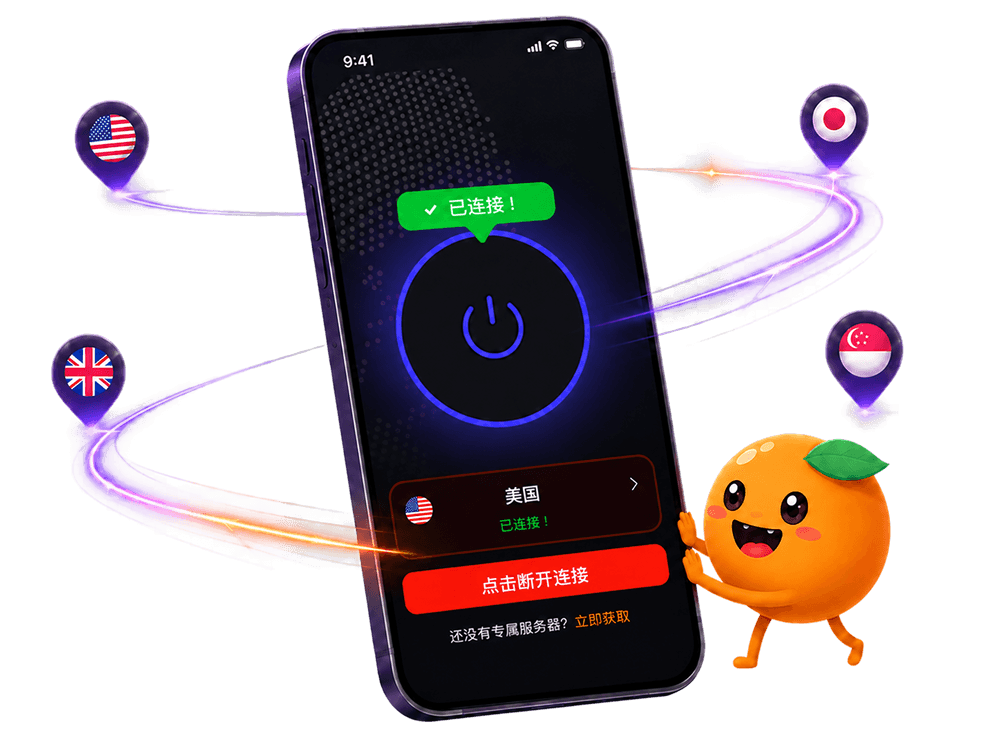
Deciding whether a product deserves trust doesn't require guessing — whether the company, privacy policy and pricing are all stated plainly is the most basic filter there is. FastOrange states all three openly, and every registered account gets free trial time daily — worth testing before betting on a product whose funding nobody can explain.

 High speed
 Millions of users
 24/7 Support
Get the Fast Orange App
One App. Every Platform. A More Stable Connection.
Available for Windows, macOS, Android, and iOS. Use One Account Across All Your Devices and Start with a Free Trial.
High speedMillions of users24/7 SupportDownload Fast Orange
 Choose your platform
Download Fast Orange
Switch between Windows, Android, iOS, and macOS