




How to Spot a Fake VPN App: 5 Checks Before You Download

Telling a fake VPN app apart from the real one doesn't require waiting until something goes wrong: five checks before downloading catch most fakes on the spot. Checking after installing is usually one step too late.



Telling a fake VPN app apart from the real one doesn't require waiting until something goes wrong: five checks before downloading catch most fakes on the spot. Checking after installing is usually one step too late — permissions are already granted, and account details may already be typed in.
VPN apps are an easy target for impersonation, because search volume is high and people in a hurry to fix a connection problem are more likely to tap download without looking closely. The cost of a fake isn't just a bad app — the real risk is account details being harvested, or being nudged into charges that were never meant to happen, and some go as far as quietly planting a backdoor while they're at it.
This piece covers how fakes usually spread, then a five-point checklist for before you download, and ends with what to do if one is already installed or information has already leaked. None of the checks need any technical background, and each takes less time than downloading again would.
Where fakes usually come from
The most common route is search ads. Impersonators bid on a brand name or related keywords to sit at the top of search results, styled closely enough to the real thing that it's hard to tell without looking closely. That kind of advertising isn't cheap, which says enough people click through to make it worth running continuously.
The second route is links passed around in chat groups, usually pitched as a "cracked version" or "unlimited time" to talk someone into skipping the official channel and installing a package directly. There's no way to verify where that file actually came from or what's been added to it, and someone in a hurry to fix a network problem is exactly who tends to let their guard down at that moment.
The third is a cloned website, with a domain just one or two letters or a suffix off from the real one and a page design that's nearly identical — often the only difference is what file the download button actually points to, which an ordinary user has little chance of catching at a glance. The fourth is a channel outside any app store that demands disabling a security setting to install — that step alone is the biggest risk, since a system's security restrictions aren't decorative, and bypassing one means every check that follows loses a layer of protection.
These four routes often get combined: an ad pulls someone to a cloned site, which then offers an installer that skips the app store entirely, walking them further from the official channel one step at a time.
Five things to check before downloading
Is the download coming from an official channelOnly download from the homepage or the official app store listing — never from a search ad, never from a link forwarded in a chat group. Bookmarking the site or memorizing it is safer than searching again every time, and it's the simplest of these five, requiring the least judgment call.
Does the domain match the real one exactlyCheck the domain letter by letter, watching for an added or missing character or a swapped suffix. A fake domain is usually only altered slightly, easy to miss on a quick glance, and only a character-by-character comparison catches it reliably — especially with letters that look alike.
Do the developer info and permissions make senseThe app store listing shows a developer name — a mismatch against the real company's information is worth treating with suspicion. Permissions matter just as much: a connection tool has no reason to ask for contacts, texts or photos, and a request like that doesn't make sense on its own.
Are the reviews suspiciously uniformA wall of glowing reviews posted around the same dates in near-identical wording is a common sign of bulk-posted reviews. The newest negative reviews are worth reading more than the overall score — they're harder to fake in bulk and tend to surface real problems.
Is the price suspiciously below market rateA price well below the normal range usually isn't a lucky find — it's a way to attract downloads first and figure out monetization later. A price that doesn't add up is itself worth a second thought; a legitimate product rarely needs to acquire users at a price below its own cost.
If it's already installed, how to confirm it's real
Open the system's permission manager and check what the app actually requests against what it should reasonably need. A connection tool asking for contacts, photos or texts doesn't make sense on its own.
Then check whether it's quietly changed anything else in the background — a browser homepage, a default search engine, or ads with nothing to do with the app's actual function. Changes like this tend to happen quietly with no prompt, and plenty of people only notice their browser homepage got swapped long after the fact.
Finally, check whether the support contact inside the app matches what's listed on the real website. A mismatch is essentially confirmation it's a fake, and that's the point to stop using it immediately.
These three checks take only a few minutes, but save far more time than dealing with a leak afterward — permissions especially, since plenty of people never open that settings page again once an app is installed.
Would an official channel ever reach out to you first
There's a simple rule for telling real from fake: a legitimate product almost never contacts you first asking for a password, a verification code, or payment details. Support exists to respond to a question you raised — not to message you unprompted about a "limited-time deal" or ask for account information.
A message claiming to be official support that asks for a verification code, or a link to "complete verification," can be treated as phishing. A real verification step only ever happens on the official site or inside the official app — never through a DM or a third-party chat tool, and never phrased with urgency like "your account will be frozen" to rush you into acting.
The safest response to a message like that is not to reply, not to click, and to verify directly on the official site whether the claim even corresponds to a real promotion. Urgency is itself a pressure tactic — the harder something pushes for "immediate action," the more it's worth stopping to verify first.
If information has already leaked, do these first
- Uninstall the app — don't spend time deciding whether to "wait and see" first
- Change any password used in that app that's also reused anywhere else — a reused password is the highest-risk one
- Check your payment history for any charge or subscription you don't recognize
- Revoke any unnecessary permission the app was granted, especially contacts and photos
- If it came from an app store, reporting it takes a moment and lowers the odds of someone else falling for it
- Build a habit going forward of checking your account's login history and authorized devices — security and privacy covers this too
Once these steps are done, whatever can be recovered usually has been. What's left is watching the next month or two of account activity and payment history for anything that shows up late — unusual charges tend to surface within a billing cycle or two.
Password hygiene beyond just the VPN covers the specific risk of reusing passwords, and what a VPN provider can actually see about you lays out what that data layer usually involves — both worth checking against once something's gone wrong.
Two habits for sticking to the official channel
The first is bookmarking the official site, or simply memorizing how it's spelled, instead of searching for it fresh every time. Every search for a brand name is another chance to run into a fake ad, and a bookmark skips that risk entirely — the cheapest of these habits by far.
The second is checking the company information. A legitimate product's site usually has a page stating who actually runs it — about us and its company background can confirm whether the channel in front of you is the real one, and a minute spent looking is far cheaper than dealing with a leak afterward.
Once both habits are in place, there's not much need to keep judging real from fake case by case — a bookmarked address and information checked once naturally keep fake channels out of the picture.
In summary
Spotting a fake VPN app comes down to five checks before downloading: the channel, the domain, developer info, reviews, and price. Once installed, confirm it through permissions, background settings, and the support contact; if information has already leaked, the first move is always uninstalling and changing passwords, then watching the bills that follow.
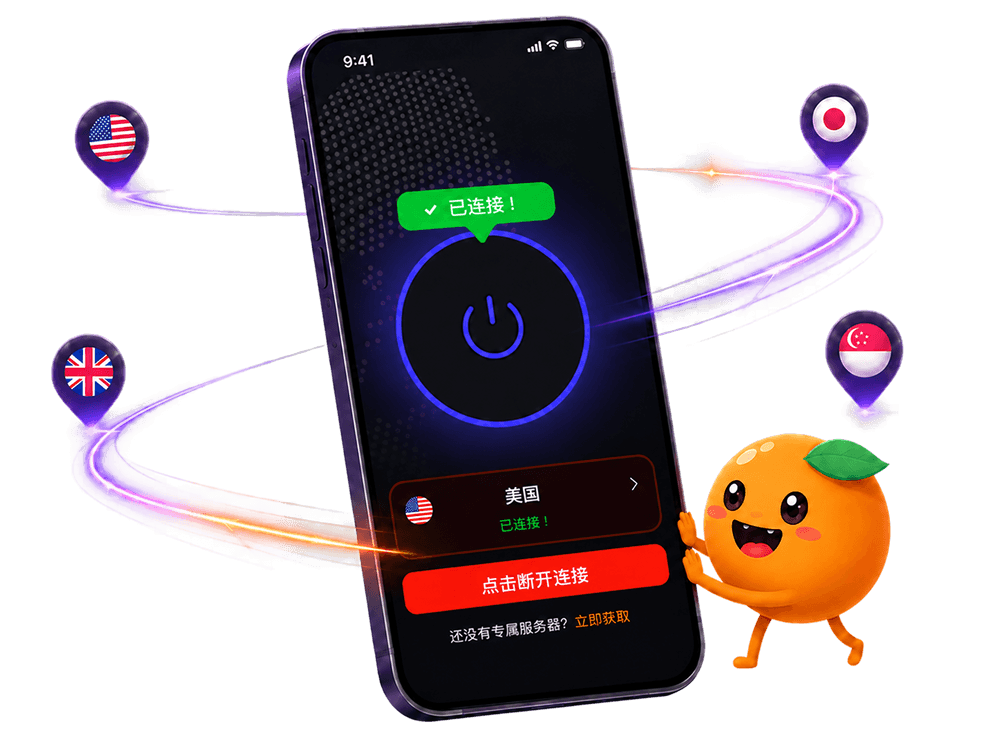
The simplest way to stick to an official channel is starting from the sign-up page directly, rather than clicking whatever shows up first in a search. FastOrange's download only exists on the official site and its official app store listing — bookmarking it is safer than searching every time, and it's the easiest first step toward not having to worry about this again.

 High speed
 Millions of users
 24/7 Support
Get the Fast Orange App
One App. Every Platform. A More Stable Connection.
Available for Windows, macOS, Android, and iOS. Use One Account Across All Your Devices and Start with a Free Trial.
High speedMillions of users24/7 SupportDownload Fast Orange
 Choose your platform
Download Fast Orange
Switch between Windows, Android, iOS, and macOS