




A Plain-Language VPN and Network Terms Glossary

Articles about getting around network restrictions are full of terms nobody explains. This is a small glossary, grouped by theme, that puts common terms in plain language — come back to look one up whenever you hit one you don't know.



Node, exit IP, jitter, no-logs policy — these terms are everywhere in articles about getting around network restrictions, but almost nothing explains what they actually mean. The result is a tutorial that throws an unfamiliar term at you halfway through, and reading it becomes more work than the problem it was supposed to solve.
This is a small glossary, grouped by theme, that puts common terms into plain language. You don't need to memorize all of it at once — come back and look up whatever you hit.
The grouping is simple: basic terms the whole internet uses, then this scene's own jargon, then the words that describe whether a connection is any good, then privacy and security terms, then the words you run into right before buying a subscription. Read in that order, and most terms you meet in other articles will already make sense.
The basic network terms to get straight first
These aren't specific to circumventing restrictions — they're basic terms the whole internet runs on. Get these straight first, and everything after this section will be easier to follow.
| Term | What it actually means |
|---|---|
| IP address | Your device's street address on the network — how a site knows where to send its response |
| DNS | The "phone book" that translates a web address into an IP address; a page that won't load sometimes just failed this lookup |
| Bandwidth | How much data a route can carry at once — like the width of a pipe |
| Port | A number that tells apart different services under the same IP address, like a unit number inside one building |
| Node / server | A machine your data passes through, or lands on, on the way to its destination |
Bandwidth and latency get treated as the same thing constantly, but they measure two different things: bandwidth is how much a route can carry at once, latency is how long a round trip takes. High bandwidth with high latency means large files download fast but a page still takes a beat to open — worth separating the two instead of lumping them into one vague "speed."
The jargon that shows up constantly in this space
These are this scene's own shorthand. Once they click, other articles get much easier to read.
| Term | What it actually means |
|---|---|
| Circumventing restrictions | An umbrella phrase for the various ways people reach sites blocked by local network restrictions — a category, not one specific technique |
| An unmanaged proxy service | A traffic- or time-based subscription proxy that usually needs you to configure the client and route yourself |
| Accelerator | A tool marketed around making one particular app work better, common in gaming and video contexts; one-tap connection is the typical form |
| Exit IP | The IP address a site sees as "your location" once you're connected — not your device's real IP |
An unmanaged proxy service and a one-tap VPN app get compared constantly, but the two are positioned differently and used differently. What actually separates the two covers that in full. "Accelerator" and "VPN" are also frequently the same underlying tool with a different name attached depending on the audience — marketed as an accelerator toward gaming and video, marketed as a VPN toward the broader idea of getting around restrictions, with no fundamental difference underneath.
The "free nodes" that circulate online mostly come from unmanaged-proxy capacity that got redistributed or resold without oversight — nobody is accountable for who is using them or what for, and neither stability nor safety is guaranteed. That is a different thing entirely from a proper subscription service, and the two should not be treated as equivalent.
The words that describe whether a connection is any good
These describe exactly where a connection "feels wrong." When someone complains a connection is choppy, they usually mean one specific thing among these.
| Term | What it actually means |
|---|---|
| Latency | How long a round trip takes; a smaller number means a faster reaction |
| Packet loss | Some of what you sent never arrived — not slower, genuinely missing |
| Jitter | Latency itself refusing to hold steady, fast one moment and slow the next |
| Reconnection | The automatic process of getting back online after a dropped connection, with a short gap with no connectivity in between |
Exactly how to tell these four apart, and what each one feels like, is covered in more depth in Latency, packet loss, jitter: the three terms explained. If your connection keeps dropping for no obvious reason, why a VPN keeps disconnecting has a dedicated troubleshooting path.
The privacy and security terms
These decide whether a tool is worth trusting, and they're worth more of your attention than speed when you're choosing one.
| Term | What it actually means |
|---|---|
| No-logs policy | A provider's commitment not to record what you specifically accessed or when |
| Encryption | Scrambling data in transit so nobody but the two ends can read it |
| Kill switch | Automatically cutting a device's connectivity the moment the tunnel drops, so traffic doesn't leak out unprotected; whether a tool has this is worth asking about |
| DNS leak | A lookup that should have gone through the encrypted route instead went out over the local network, exposing what you were actually trying to reach |
Individually none of these is complicated, but together they're the basic framework for judging whether a service is trustworthy. A service that can't say what its no-logs commitment actually covers, dodges questions about encryption, or can't even confirm whether it has a kill switch, probably hasn't taken this part seriously.
Exactly what to check about a no-logs policy, and what encryption actually protects, are covered separately in what a no-logs policy actually means and VPN encryption basics. If you suspect a DNS leak, what a DNS leak is and how to check for one has the concrete steps.
The words you'll hit right before buying
Before picking a subscription, these terms decide exactly what you're paying for.
| Term | What it actually means |
|---|---|
| Subscription | Paying monthly or yearly for continued use, rather than a one-time purchase |
| VIP / membership tier | A higher tier than the basic plan, usually mapped to higher speed or more usable devices |
| Free trial | Free access for a period right after signing up — usually the cheapest way to judge whether a tool suits you |
| Money-back guarantee | The ability to request a refund within a promised window if you're not satisfied after trying it |
| Multi-device | Whether one subscription can be logged in on a phone, a computer and other devices at the same time |
What these terms have in common is that they let you work out exactly what a subscription includes before you pay, instead of finding out a month in that the device limit is too low or the refund window is stricter than you assumed.
What FastOrange does on these fronts: every registered account gets free trial time each day, one subscription covers multiple devices at once, and there's a 30-day money-back guarantee — if it's not a fit, you can request a refund inside that window instead of committing a full year's payment up front on a guess.
In summary
Terms around circumventing restrictions look like a lot, but most of them sort into five buckets: basic networking, this scene's own jargon, connection quality, privacy and security, and buying-related terms. Once you can guess which bucket an unfamiliar term belongs to, looking up its exact meaning goes much faster. This glossary doesn't try to be exhaustive — it only covers the terms that actually show up in articles and support conversations most often; the more obscure industry jargon isn't something a regular user needs to remember.
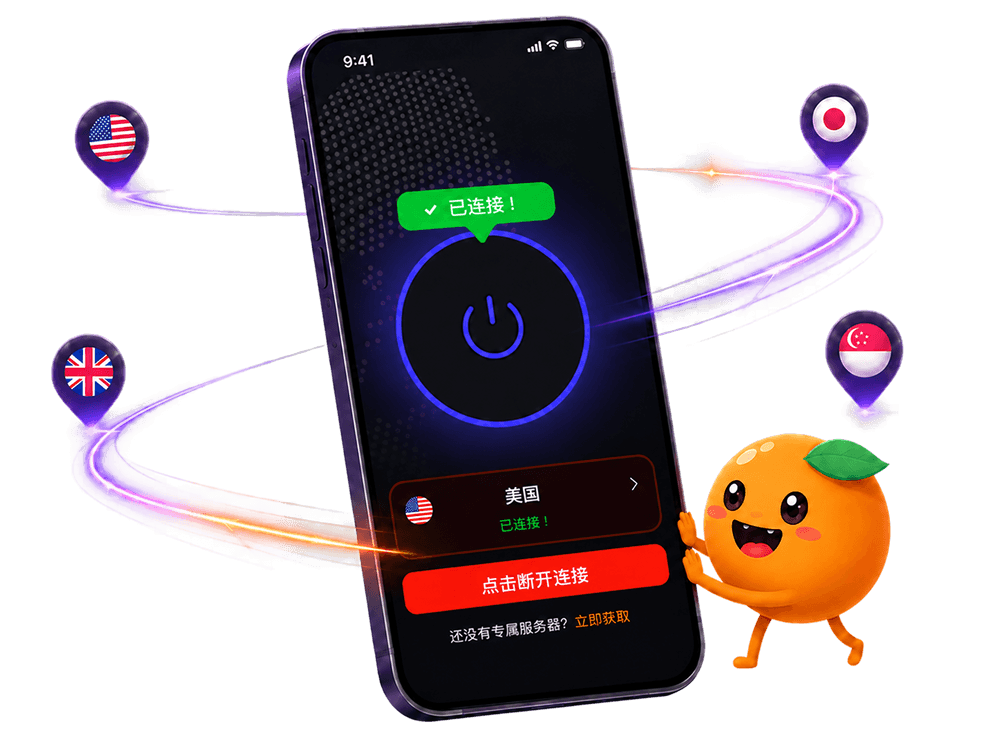
If you'd rather just start using a tool without mastering every term first, that's fine too: FastOrange connects in one tap and doesn't require understanding concepts like nodes before you can use it. Start using it, and come back to this page whenever an unfamiliar term actually matters.

 High speed
 Millions of users
 24/7 Support
Get the Fast Orange App
One App. Every Platform. A More Stable Connection.
Available for Windows, macOS, Android, and iOS. Use One Account Across All Your Devices and Start with a Free Trial.
High speedMillions of users24/7 SupportDownload Fast Orange
 Choose your platform
Download Fast Orange
Switch between Windows, Android, iOS, and macOS