




What a VPN Actually Is: Business Use vs. Personal Use

Whether a VPN is fine to use has no single answer. This separates what a VPN actually is, why businesses rely on it, what personal use depends on, and how a specific service's own terms fit in — rather than offering one blanket conclusion.



What a VPN actually is isn't complicated: it's technology that builds an encrypted connection between your device and another server, and your traffic travels through that connection before reaching its destination. The technology itself is one of the most common standard tools inside corporate networks worldwide — an employee accessing company systems from home, or a distributed team reaching internal resources, are both running on the same basic technology.
But whether using a VPN is "fine" has no single answer, because it depends on three separate things: who is using it, where, and for what. This isn't going to hand down one blanket conclusion — instead it separates those three things, and points at where to actually find an answer that applies to you.
One note before going further: this isn't legal advice, and it doesn't evaluate any location's specific policy. Wherever the wording could go either way, it leans toward the more conservative phrasing.
Why VPNs are standard in business
In a business context, a VPN is close to standard equipment. A multinational company needs employees to reach internal systems safely from anywhere; remote work needs an encrypted channel back into the company network; distributed teams need the same guarantee that data isn't visible to a third party in transit. All of this serves one purpose — securing data in transit — and has nothing to do with a particular region or industry; it's standard practice globally.
When a business buys a VPN service, a dedicated IT or compliance team usually reviews the terms, the data flow and the intended scope. That review step is the biggest difference between a business context and a personal one — a business has someone dedicated to checking; an individual is usually making that call alone.
Beyond remote access to internal systems, businesses also use a VPN to protect data in transit on public networks — an employee handling work on hotel or airport Wi-Fi while traveling, for instance. That use case is about data security, a different starting point from "getting around some restriction," and the latter is where personal use is more likely to raise a compliance question in the first place.
Personal use and regional differences
The specific rules around personal VPN use aren't the same across countries and regions, and they change over time. This article can't, and shouldn't try to, tell you what a specific region's current rules are — that kind of information moves fast and depends on your specific circumstances. The only reliable approach is checking that location's current official rules, not a general statement in an article somewhere online.
What can be said clearly is a principle: the technology itself is neutral, and the same technology runs into different rules in different places and different contexts. Conflating "is this technology itself lawful" with "does using it this way, in my location, match current local rules" is where this topic goes wrong most often.
That's also why asking bluntly "is a VPN legal" rarely gets a useful answer — the question itself is missing the two things that actually matter: where, and how. Asking instead "does my location have specific rules about personal VPN use," and then checking that location's current official information, gets an answer that actually applies to you.
A service's own terms are a separate matter
Beyond regional rules, there's a layer that gets overlooked constantly: the specific service you're trying to reach may separately restrict VPN access in its own terms of use. Some streaming, financial or e-commerce platforms state outright that accessing an account through a proxy or VPN isn't allowed, usually for reasons tied to content licensing, risk controls, or pricing strategy — a business decision that platform made on its own.
That restriction is a contract issue, not a technical one, and it isn't part of the question of whether a VPN is lawful. Breaking a platform's terms of use usually results in that platform limiting or suspending your account — a separate matter from whether the VPN itself is compliant, and the two shouldn't be judged as one.
Splitting a specific situation into two separate questions makes it much clearer: first, does my location have specific rules about personal VPN use; second, does the specific service I want to reach say anything about proxy or VPN access in its own terms. The answers come from two different sources — regional rules on one hand, a platform's own terms on the other — and asking them as one blurred question usually produces an answer that sounds right without actually being accurate.
Common misunderstandings
- "VPNs are illegal" and "this particular service's terms don't allow VPN access" are two different claims — the first is about regional rules, the second about one platform's contract terms.
- Business use of VPNs being standard worldwide doesn't carry over to whether personal use in some other context is compliant — different context, potentially different rules.
- One location's rules don't imply another location has the same rules; moving to another country, or even just traveling there temporarily, means what you looked up before may no longer apply.
- Whether a technology exists and is widely used, and whether one specific use of it is permitted, are two separate questions — one being true doesn't establish the other.
- Someone else's account of their own experience, however confident it sounds, doesn't substitute for current official information where you are — an anecdote online is a personal experience, not a rule.
How to actually check
Working this out doesn't require becoming a lawyer, but it does take a few minutes spent on two specific things, rather than going with a gut impression.
Check your location's current rulesGo by official information that's current for where you actually are right now, not a possibly outdated statement in an article or forum post. Rules get updated, and something accurate a few years ago may no longer hold today — when unsure, lean conservative.
Check the specific service's terms of useIf the goal is reaching one particular platform or service, check that service's own terms of use directly for any specific mention of proxy or VPN access restrictions. This is a separate question from "is a VPN legal," and keeping the two separate is what makes the answer to each one accurate.
Picking a legitimate provider is also part of this. There are plenty of counterfeit or unclear-origin VPN apps out there, and how to spot a fake VPN app or a copycat site covers exactly how to tell them apart. Choosing a provider that's clear about who it is and has terms that are actually readable matters more, in practice, than getting stuck on the blanket question of "is this legal."
In summary
As a technology, a VPN is a standard tool in corporate networks worldwide — that part isn't in dispute. What actually needs a specific judgment call is "how does an individual use this in a specific location and context" and "does a specific service's terms allow it," and both of those need to be checked against current, local, current-for-that-service information — something this article can't, and shouldn't, reduce to one universal answer. When unsure, leaning toward the more conservative choice costs a lot less than fixing it after the fact.
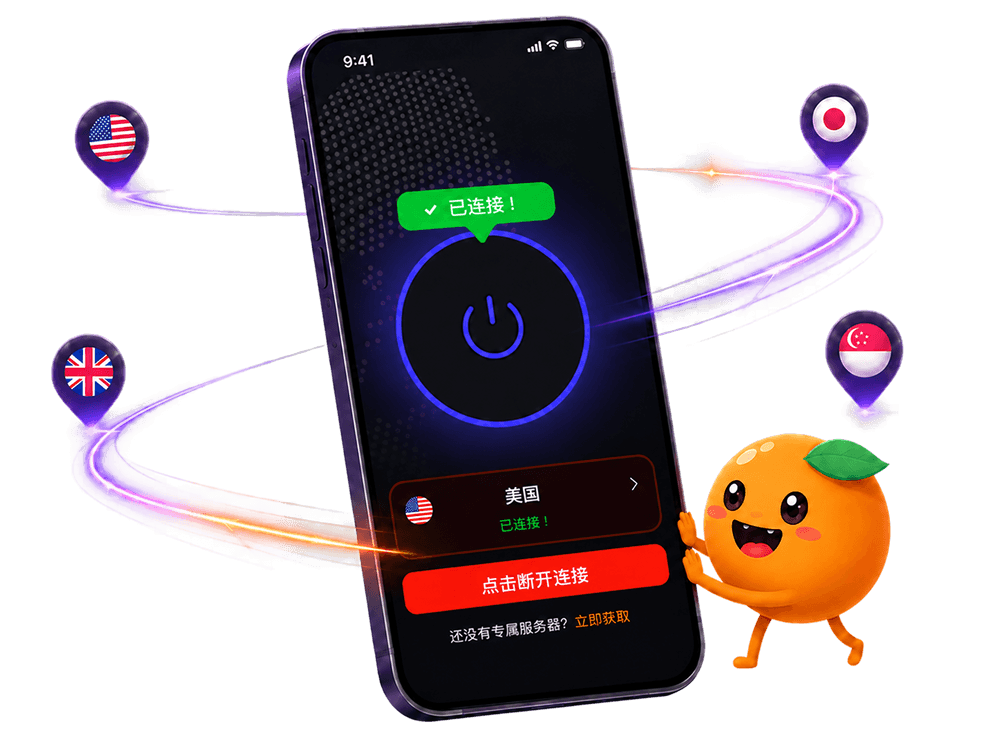
If the goal right now is just understanding what a VPN actually is and what it does before deciding how to use one, what FastOrange does is a reasonable starting point, and the FAQ covers more specifics; several of the terms mentioned here also get a fuller explanation in a plain-language VPN terms glossary.

 High speed
 Millions of users
 24/7 Support
Get the Fast Orange App
One App. Every Platform. A More Stable Connection.
Available for Windows, macOS, Android, and iOS. Use One Account Across All Your Devices and Start with a Free Trial.
High speedMillions of users24/7 SupportDownload Fast Orange
 Choose your platform
Download Fast Orange
Switch between Windows, Android, iOS, and macOS