



What Is an IP Address, and Why It Decides What You See

You look up your own IP and the region is not what you expected — that is probably the first time most people give this four-letter term any real thought. What it actually is, how it decides what you see, and what it cannot do.



An IP address is a device's address on the network: routers use it to send data packets to the right place, and sites use it to guess roughly where you are. Those two jobs, getting data to the right place and guessing where you are, are the ones an IP address gets used for most, and they are the focus of this article.
Most people first give an IP address any real thought after running into a concrete problem: a lookup that shows the wrong region, or a site flagging a login as unusual. This article starts with what an IP address actually is, moves on to how it gets used day to day, and finishes with what it cannot do.
One claim worth deflating early: an IP address cannot pinpoint a home street address directly. The precision it can actually reach usually stops at a city or a carrier's data center. Anything sharper needs other information layered on top; an address alone will not get you there.
What an IP address actually is
Every device connected to a network gets assigned an IP address for that session, written as a set of numbers, or in the newer format, a mix of letters and numbers. That address does two jobs: it tells the network where to send data back, and it is what a destination site reads to guess roughly which region the connection is coming from.
An IP address is not a device's ID card. It behaves more like the delivery address on a parcel: it says where this particular delivery is going, not who it belongs to. The same device gets a different address the moment it switches networks, and the same address can get handed to a different device at a different time; carriers and cloud providers assign addresses on demand rather than binding one permanently to one device.
Addresses are not usually permanent, either. Home broadband commonly gets a new one from the carrier on a regular cycle, and a phone can pick up a new one just from switching cell towers. That instability is the normal state of things, not a fault, and a changed address by itself is no reason to suspect the device or the network.
How an IP address actually does its job
Loading a web page roughly follows this sequence behind the scenes:
- The device needs the destination's IP address, which is where DNS translates a domain name into an address.
- The device packages the request, stamps it with its own address and the destination's address, and hands it to the router.
- The router and the network equipment along the way use those two addresses to move the packet all the way to the destination server.
- The server processes it and sends the result back the same way, again relying on the addresses to find the way home.
Those four steps usually finish in tens to a few hundred milliseconds, fast enough that the process itself is invisible, but an IP address is doing the work of "finding the way" at every one of them. That is also why a wrong address, or a mismatched handoff somewhere in the middle, tends to show up as a page spinning until it times out rather than failing immediately: the request genuinely went out, it just never found its way back.
Here is a concrete failure mode: if step two stamps the wrong address, or something along the way quietly swaps it for another one, the returning data gets sent to the wrong place. That is exactly the "spins until it times out instead of failing outright" pattern, because the request really did leave. It just has nowhere to come back to.
How a site uses your IP to guess where you are
When a site sees an incoming connection, one of the things it can read is the source IP address. That address is usually assigned to a particular country, city, or even a specific carrier's data center, and the site checks it against a database that maps addresses to regions to arrive at "this connection is probably coming from here."
That mapping is not a live, pinpoint location. It is a record of which range of addresses belongs to whom, and how current and accurate it is varies by database. The same address can show up as a neighbouring city or region on different lookup sites now and then, which is a quirk of the underlying database, not a sign that anything is actually wrong with the connection.
Switch to a different node or proxy, and the outward-facing address changes, so the site's lookup against that same mapping comes back with a different region. That is the same mechanism covered in what a proxy actually is, and how it differs from a VPN: whether changing an address changes what you see depends entirely on whether the destination judges purely by that one signal.
Which organisation or country a given block of addresses belongs to keeps shifting as blocks get transferred and data centers move, and the lookup databases need constant updating to keep up. That is the real reason two different platforms can give slightly different answers for the same address — not that either side is deliberately getting it wrong, just that the underlying data updates at different speeds.
Does an IP address reveal which sites I've visited
An IP address by itself is just an address; it does not record what you actually did on a destination site. But the act of connecting itself, which address a device connected to, can be visible at certain points along the way, and that is a different kind of problem from whether the content of a page can be read.
Whoever runs the network you are on, or your carrier, can in principle see which addresses a device connected to, and from that roughly infer which sites got visited. That layer does not require reading a single word of any page's content; knowing "who it connected to" is already enough. Whether the actual transmitted content can be read comes down to a separate mechanism entirely. VPN encryption, the basics draws that line more precisely.
That is also why plenty of circumvention tools talk about "encryption" in the same breath as changing your address. Changing the address alone only solves "which address does the destination site see." It does not solve "can anyone along the way see which addresses you connected to." Both need handling together for the picture to be complete; changing the address on its own is not the full answer.
Where you actually run into this
The most common scenario is looking up an address, finding the region does not match expectations, and assuming right away that nothing worked. Most of the time that comes down to how the check was done, checking too fast or using the wrong lookup method. IP still shows mainland China after connecting walks through the specific causes, most common first.
Another common one is online banking, or some other account, suddenly flagging "login from an unfamiliar location." That is the site's own risk system reacting: the region an address maps to does not match where the account usually logs in from, so the system gets cautious on purpose and asks for extra verification. That is not necessarily a sign anything is wrong with the address; it is the site choosing to err on the side of caution.
Checking whether a content library changed after switching nodes relies on the same mechanism: a site judges the region from the address and decides which region's content to show, provided it is judging by that one signal alone, with nothing else like account registration region layered on top.
Competitive games use a similar judgment too. A matchmaking system sorts you into a regional server based on the connecting address, so switching a node effectively switches which region you get matched into. That is also why specific regional nodes get discussed on their own in gaming contexts; underneath, it is the same address-to-region mapping this article covers.
What an IP address cannot tell you
An IP address regularly gets credited with more than it can actually do. The following are the most commonly misunderstood points.
- It cannot pinpoint a street address. What is available usually resolves to a city or a data center's ownership, and anything sharper needs the carrier's own internal records, which nobody can reach from the outside with an address alone.
- It does not equal one person. The same address can be handed to different devices at different times, and the same device can end up on different addresses at different times. An address maps to "this connection," not to a fixed person.
- It does not always switch completely. If a device has both IPv4 and IPv6 addresses and only one gets taken over, the other can still carry the original address, and which one a checking tool happens to use can make the result inconsistent.
- It cannot prove something is "safe" or "unsafe." An address by itself is only a location signal; judging risk needs other information alongside it, and a single IP address is not enough to reach that conclusion on its own.
In summary
An IP address is a device's address on the network, doing two jobs at once: telling the network where to send data, and letting a site guess roughly where the connection is coming from. It is not an ID card, it cannot pinpoint a street address, and it cannot say anything about safety on its own.
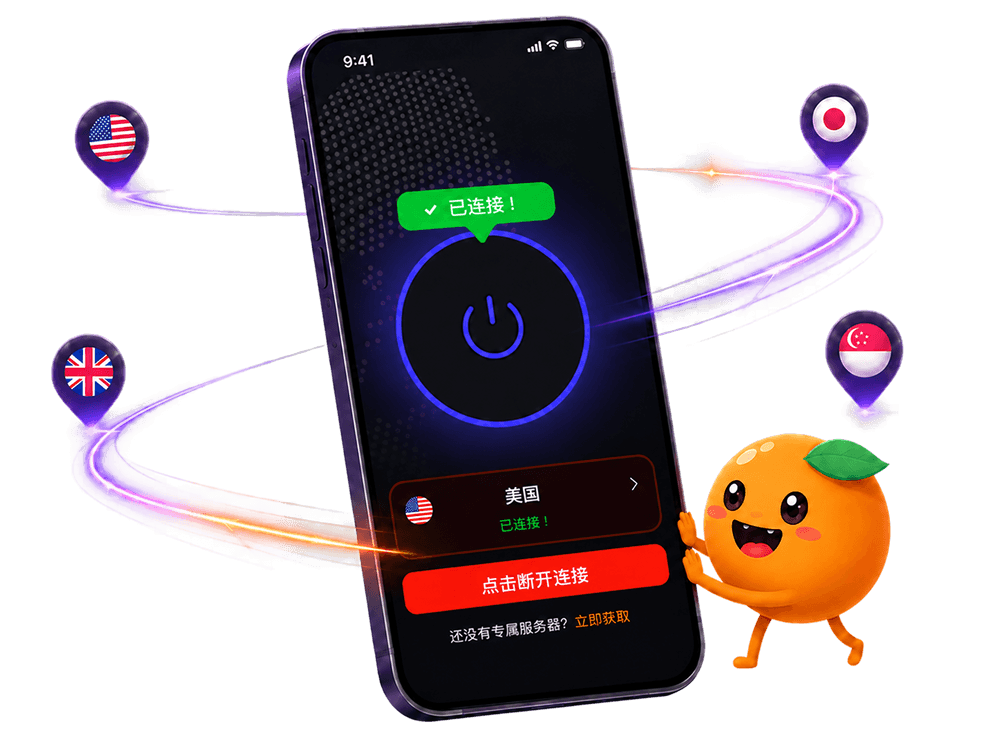
FastOrange's nodes span multiple regions, so switching a node simply switches your outward-facing IP address, one tap, no manual setup. See what it does for the fuller picture, and choosing a server location covers how to pick one. Every registered account gets free trial time daily, so connect once and see whether the address you look up actually changes.

 High speed
 Millions of users
 24/7 Support
Get the Fast Orange App
One App. Every Platform. A More Stable Connection.
Available for Windows, macOS, Android, and iOS. Use One Account Across All Your Devices and Start with a Free Trial.
High speedMillions of users24/7 SupportDownload Fast Orange
 Choose your platform
Download Fast Orange
Switch between Windows, Android, iOS, and macOS